How to Measure Insect Screens for Doors and Windows in Qatar
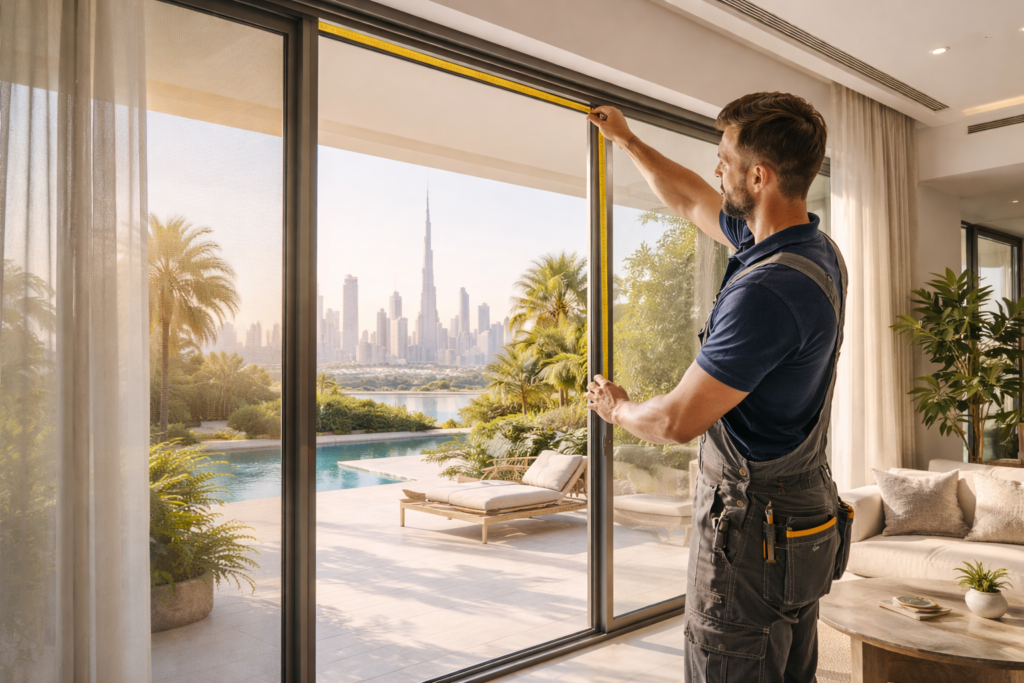
Installing insect screens is one of the most effective ways to protect your home from mosquitoes, flies, and other insects while still allowing fresh air to circulate. However, even the best insect screen will not work properly if it is not measured accurately.
In Qatar, where homes often rely on natural ventilation through windows, balcony doors, and patio doors, accurate measurements for fly screens are essential to ensure a perfect fit.
This step-by-step guide explains how to measure insect screens for doors and windows in Doha, Lusail, and across Qatar, helping homeowners avoid gaps, installation issues, and costly mistakes.
Why Accurate Measurement is Essential
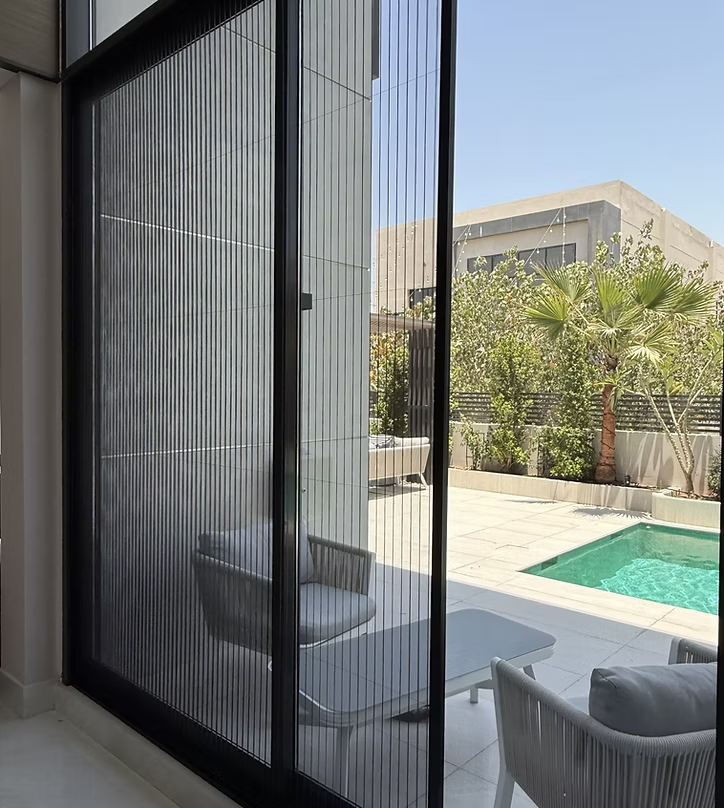
Measuring correctly is the first and most important step when installing insect screens. Poor measurements can lead to screens that are either too loose or too tight, reducing their effectiveness and lifespan.
Here are some key reasons why accurate measurements matter:
Complete Protection Against Insects
Properly fitted screens prevent mosquitoes, flies, and other pests from entering your home through small gaps around windows and doors.
Avoid Costly Adjustments
Incorrect measurements may require replacing the screen or modifying the frame, which increases installation costs.
Maintain a Clean and Professional Look
Well-measured screens blend seamlessly with window and door frames, preserving the overall appearance of your home.
Long-Term Durability
Screens that fit perfectly experience less tension or bending, which improves durability and performance over time.
For homes in Doha villas, Lusail apartments, and residential buildings across Qatar, precision measurement ensures the insect screen performs as expected.
Tools You Will Need
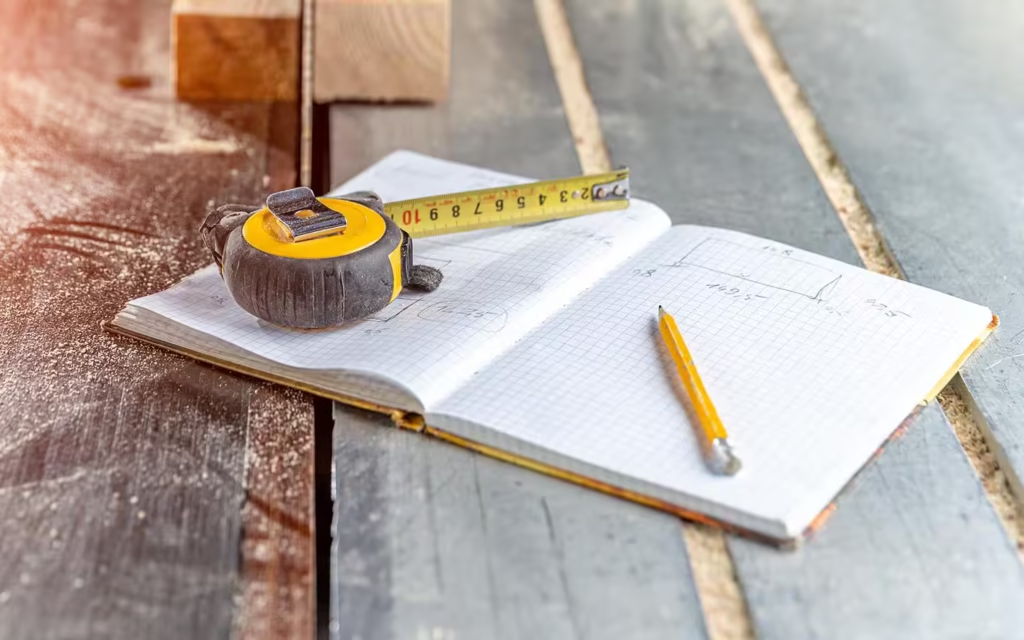
Before you begin measuring your doors and windows, make sure you have the right tools available. Using proper measuring tools will help ensure accurate results.
Measuring Tape
A metal measuring tape is recommended because it stays straight and provides more precise measurements compared to flexible plastic tapes.
Pencil and Notepad
Recording measurements immediately helps prevent confusion later when ordering the insect screens.
Step Ladder
For tall windows or balcony doors, a ladder may be needed to measure the upper frame safely.
Level (Optional)
A level helps ensure your measurements are aligned correctly, especially for large windows or sliding doors.
Tip: Always measure each opening at least twice to confirm accuracy before placing an order for insect screens.
Understanding Different Installation Types
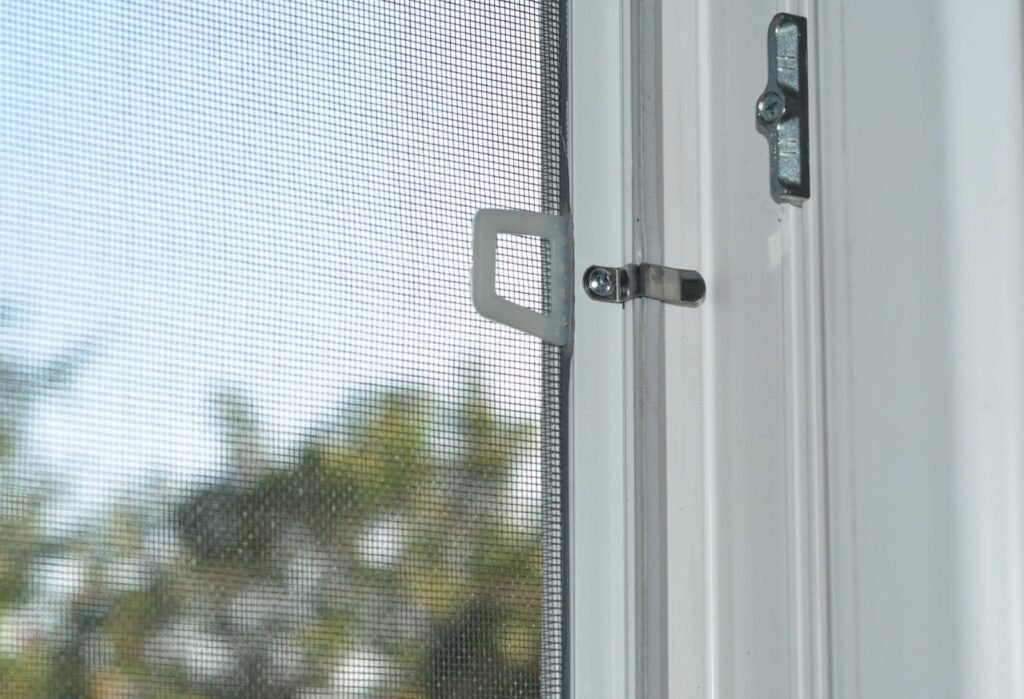
Before measuring, it is helpful to understand where the insect screen will be installed. There are typically two common installation methods:
Inside Frame Installation
The insect screen sits inside the window or door frame. This method requires precise measurements and adequate frame depth.
Outside Frame Installation
The screen frame is mounted on the outer surface of the window or door frame. This method is more forgiving and commonly used for retrofit installations.
Professional installers in Qatar usually determine the best method depending on the window design and available space.
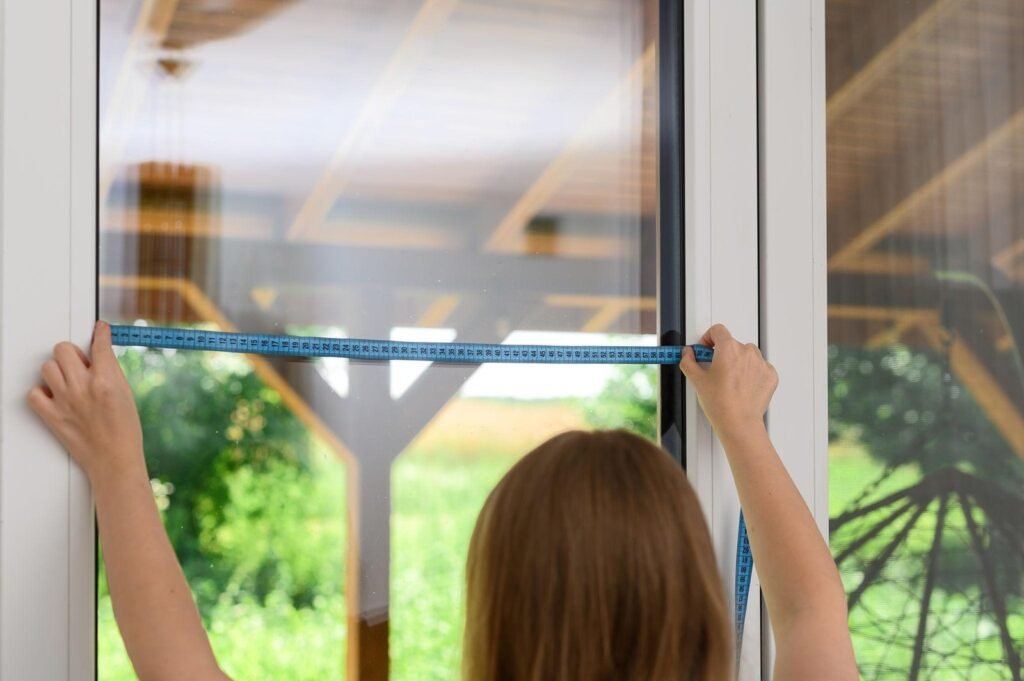
Step-by-Step Guide to Measuring Windows
Windows are the most common locations for insect screens. Follow these steps to ensure accurate measurements.
Step 1: Measure the Window Width
Using your measuring tape, measure the width of the window frame at three different points:
Top of the frame
Middle of the frame
Bottom of the frame
Because window frames are not always perfectly straight, the measurements may vary slightly.
Always use the smallest measurement to ensure the screen fits properly.
Step 2: Measure the Window Height
Next, measure the height of the window frame at three points:
Left side
Center
Right side
Again, use the smallest measurement to avoid installation issues.
Step 3: Check Frame Depth
Frame depth is important because the insect screen frame needs enough space to sit securely.
Measure the depth of the window frame to ensure there is enough room for the screen frame and mesh.
For most fixed insect screens, a minimum frame depth is required for proper installation.
Step 4: Record All Measurements
Write down each measurement clearly. It is recommended to record them in the following format:
Window width
Window height
Frame depth
Installation type (inside or outside frame)
Clear documentation helps prevent mistakes when ordering custom insect screens.
Step-by-Step Guide to Measuring Doors
Doors require slightly different measurements because they are larger and used more frequently.
Step 1: Measure Door Width
Measure the width of the door opening at three points:
Top
Middle
Bottom
Again, select the smallest measurement to ensure proper fit.
Step 2: Measure Door Height
Measure from the floor to the top of the door frame.
Ensure the measurement allows sufficient clearance if the screen will be installed above the floor or track system.
Step 3: Identify the Door Type
Different door styles require different insect screen solutions. Common door types in Qatar homes include:
Sliding glass doors
Hinged doors
Folding doors
Patio or balcony doors
Each door type may require a different screen system, such as retractable insect screens or sliding screens.
Step 4: Confirm Measurements
Before ordering your insect screens, double-check all measurements.
Small errors can create gaps that allow insects to enter, reducing the effectiveness of the screen.
Many homeowners make simple mistakes when measuring insect screens. Avoid these common errors:
Measuring Only Once
Always measure twice to ensure accuracy.Ignoring Frame Depth
Without sufficient depth, the insect screen frame may not fit properly.Using Approximate Measurements
Always measure in millimeters or centimeters rather than estimating.Forgetting Door Movement Clearance
Doors that slide or swing require additional clearance for the screen mechanism.
Avoiding these mistakes will save time and ensure your insect screens fit perfectly.
Common Measurement Mistakes to Avoid
Tips for Professional Installation
Although measuring can be done independently, professional installation often produces better results.
Experienced installers in Doha, Lusail, and other Qatar cities offer several advantages:
Accurate Measurements
Professionals use specialized tools to ensure precise measurements.Custom Screen Manufacturing
Screens can be fabricated to match exact door and window dimensions.Proper Alignment and Installation
Professional installers ensure screens are mounted securely and operate smoothly.Long-Term Reliability
Proper installation improves durability and reduces maintenance requirements.
After installation, proper maintenance helps extend the lifespan of your insect screens.
Maintenance tips include:
Cleaning the mesh regularly to remove dust and sand
Checking frames and tracks for debris
Inspecting retractable mechanisms periodically
Repairing small tears early to prevent further damage
With proper care, high-quality insect screens can last for many years.
Maintaining Your Insect Screens
Conclusion – Get a Perfect Fit Every Time
Accurate measurement is the foundation of successful insect screen installation. By carefully measuring your doors and windows, you can ensure your screens provide complete protection against insects while maintaining airflow and comfort.
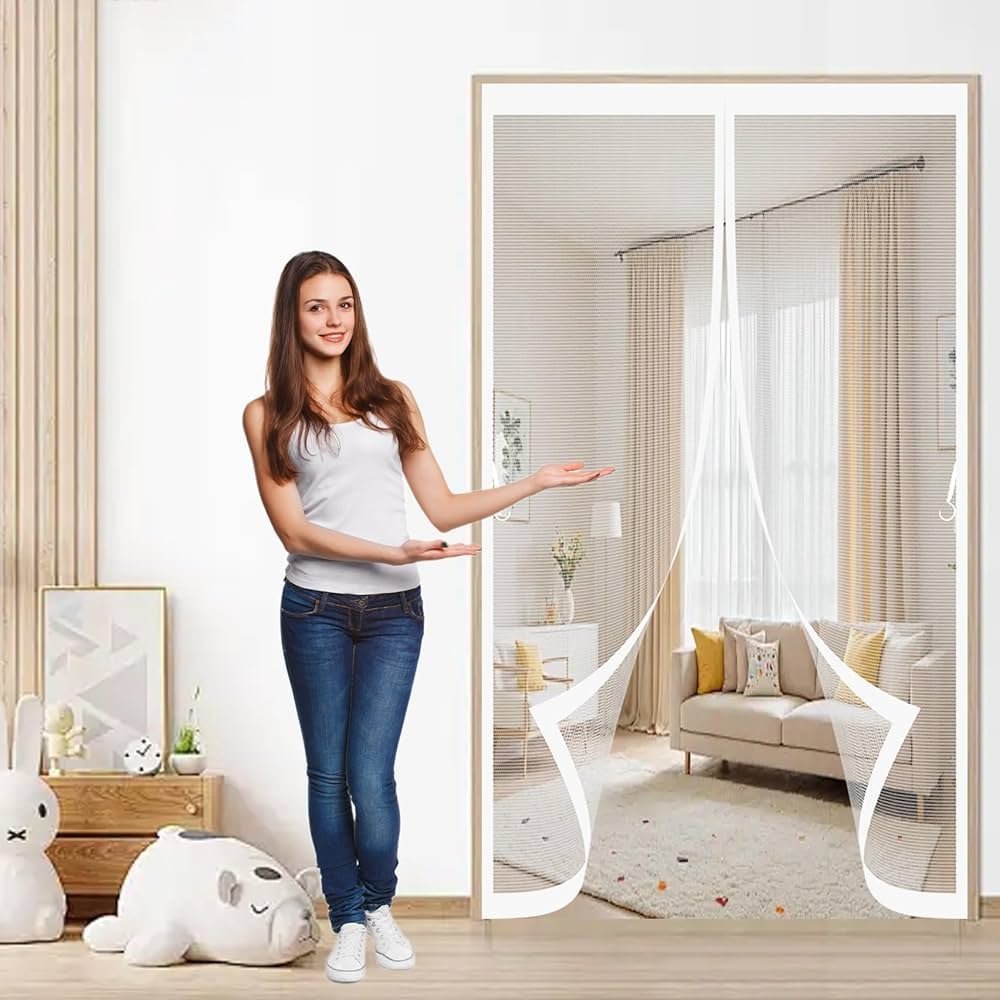
Whether you are installing fixed screens for windows, retractable screens for balcony doors, or magnetic screens for apartment entrances, proper measurements guarantee a perfect fit.
For homeowners across Doha, Lusail, Al Wakrah, and Qatar, working with professional installers ensures that insect screens are measured, manufactured, and installed correctly.
A well-measured insect screen system will help keep your home clean, comfortable, and insect-free all year round.